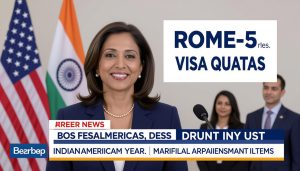





The United States’ H-1B visa program is once again facing serious questions, this time raised by an Indian-American diplomat. Mahvash Siddiqui, a former consular officer at the US Consulate in Chennai, claims there is widespread and organized fraud within the system, especially involving Indian applicants. According to her, 80–90% of H-1B visas issued to Indians involved forged documents, fake degrees, or unqualified applicants.
Siddiqui, who worked in Chennai between 2005 and 2007, said the consulate witnessed high volumes of visa applications, with Chennai alone supposedly handling 220,000 H-1B approvals in 2024—far exceeding the national cap of 85,000. She expressed doubt about the need for such a high number of foreign STEM workers, arguing that the problem isn’t a talent shortage, but the misuse of the visa system.
She stated that fraudulent practices were observed early and reported to higher authorities, yet no corrective action was taken due to political pressure. Siddiqui further alleged interview fraud, where unqualified or proxy applicants managed to pass through the system, and revealed schemes involving bribes and job offers in exchange for kickbacks.
Former Congressman and economist Dr. Dave Brat echoed Siddiqui’s concerns, questioning how a single consulate could process more than double the visa cap. Both raise concerns of what they call “industrial-scale fraud,” suggesting deeper structural issues in the H-1B visa process.
Siddiqui’s testimony has renewed scrutiny of how the H-1B system operates and whether changes are needed to prevent abuse and protect jobs intended for genuinely skilled professionals.