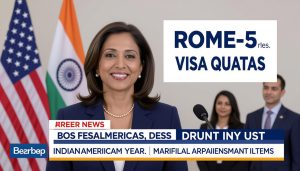





Recently, there has been growing discussion in the media and on social platforms criticizing Indian-origin CEOs in the US for not publicly defending India in response to American trade actions. However, expecting these CEOs to act as advocates for India simply because of their heritage is misguided.
Most Indian-origin CEOs are American citizens. Their primary responsibility is to act in the best interests of the United States. If they were to take sides in disputes between the US and India—particularly in sensitive matters like tariffs or trade—it could be seen as a conflict of interest and damage their credibility. Such actions could hurt not just their professional standing, but also the broader perception of Indian immigrants in the US.
Indian immigrants already face criticism over issues like the H1B visa program, with claims that they displace American workers. If Indian-origin professionals were also seen as favoring a foreign country over the US, it could fuel distrust and reinforce existing biases. This could provide more ammunition to those opposing Indian immigration and question the loyalty of Indian-Americans.
Ultimately, success in a host country means balancing cultural identity with civic responsibility. Indian-origin leaders in America can support India in other ways without compromising their civic duties.