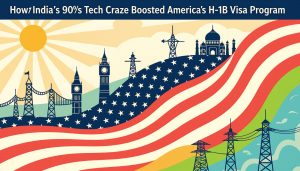





Immigrants in the United States, both legal and undocumented, are feeling anxious due to the Trump administration’s tough immigration stance. Kabir, an engineer from India working in Silicon Valley on an H-1B visa, says losing his job would mean leaving the country, as his visa depends on employer sponsorship. He highlighted the stress of needing to find a job within 90 days if unemployed, despite contributing to the U.S. economy. His wait time for a Green Card is estimated at 108 years.
H-1B visas, introduced in 1990 to bring skilled workers to the U.S., now leave many in uncertainty. Tied tightly to employers, workers on these visas have limited rights and fear job loss, which could mean deportation. Critics say the system is being exploited to replace American workers and reduce wages.
Silicon Valley, highly reliant on foreign talent, often prefers H-1B holders over permanent residents, as this allows them to retain talent on lower wages and restrict job mobility. Many major tech leaders themselves are immigrants, adding complexity to the issue.
Silicon Valley’s influence in U.S. politics is significant, and some believe its support may sway Trump’s policies. Although previously critical of H-1B visas, Trump has recently shown interest in attracting skilled immigrants, potentially influenced by the tech industry’s needs.
Indian professionals are the most impacted, making up over 70% of H-1B holders. The uncertainty in U.S. policy and experiences of discrimination are pushing many to return to India, where they are starting new ventures. Experts warn that if restrictions tighten further, the U.S. risks losing top talent to other countries.