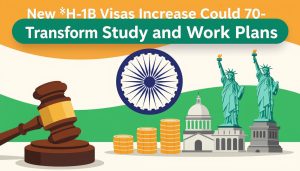





US President Donald Trump’s decision to raise the H-1B visa fee to $100,000 has sparked concern among Indian tech professionals and students living in the US. This move is meant to protect American jobs, but experts warn it may hinder US innovation and drive skilled workers back to India or other countries with friendlier immigration policies.
The H-1B visa, used primarily by the tech industry, has long been a gateway for skilled Indian professionals—who make up about 70% of recipients—to work in the US. The steep fee increase and changes to the lottery system, which will now prioritize higher-salary applicants, may make it harder for startups and smaller firms to compete. Critics argue that this change disproportionately benefits large corporations with deeper pockets.
American workers have raised concerns about being replaced by H-1B holders, especially in companies like Tata Consultancy Services. However, Indian outsourcing firms are shifting towards hiring more local talent in the US. Some Indian professionals are now looking at Canada, the UK, and Germany as alternative destinations, which are actively seeking skilled tech workers.
Experts believe this policy will drive many Indian engineers to return home, potentially boosting India’s growing tech ecosystem. Returnees bring valuable global experience, networks, and capital to cities like Bengaluru and Hyderabad. However, challenges remain in India, including lower salaries, hierarchical work culture, and limited high-end opportunities for fresh graduates.
While the new visa rules aim to prioritize American employment, the broader impact may be a decline in US innovation and a rise in India’s global tech prominence.