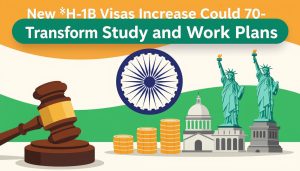





The H-1B visa has long been a gateway for Indian professionals in technology, healthcare, and education to work in the US, seen by many as a step toward the “American Dream.” However, a new $100,000 fee imposed by US President Donald Trump on September 21 has sparked major controversy and concern, especially for middle-class Indians and startups.
Previously, H-1B visa fees ranged from $2,000 to $5,000. Now, the dramatic fee hike is expected to cost nearly ₹83 lakhs, affecting students, small firms, and IT companies like TCS, Infosys, and Wipro. These businesses may now face financial strain and reduced profitability.
Reactions have been mixed. While some argue the move protects American jobs and curbs visa fraud, others believe it hinders innovation and deters global talent. Critics like entrepreneur Ajay Jain Bhutoria say it could harm startups and lead to legal challenges. On the other hand, supporters like attorney Anand Ahuja view it as a way to improve immigration integrity.
Industry leaders warn this policy may cause Indian firms to adjust global strategies and increase outsourcing. Immigration expert Sahil Nyati emphasized the emotional and professional loss for Indians who saw H-1B as a bridge to success. He supports fair reforms but warns against excessive exclusion that hampers opportunity and innovation.
Indian students currently in the US face uncertainty, with many reconsidering their futures. The shift may push talent toward countries like Canada and the UK. Students who intended to transition from F-1 to H-1B feel especially affected.
It’s important to note that the $100,000 fee applies only to new applications made after September 21, 2025. Current H-1B holders and renewals are exempt. While this fee is a one-time payment and not annual, ongoing policy changes continue to create uncertainty about the H-1B program’s future.