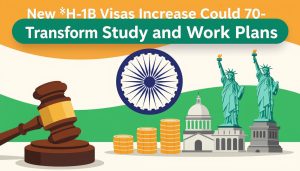





In 2025, former U.S. President Donald Trump reintroduced strict immigration policies, including a $100,000 fee for each H-1B visa issued to foreign workers. This move has significantly limited opportunities for Indian tech talent, making it harder for all but the top-tier professionals or those backed by wealthy employers to pursue careers in the U.S. As a result, many Indian professionals are now turning their attention to the Gulf region.
Countries like the UAE, Saudi Arabia, and Qatar are offering long-term visas, tax-free income, and thriving tech and innovation ecosystems. Initiatives like Saudi’s Vision 2030, Dubai’s 2040 Master Plan, and Qatar’s post-World Cup development are creating strong demand for skilled engineers, IT experts, and entrepreneurs. Unlike the U.S. system, which relies on a complex lottery, the Gulf offers straightforward visa options such as the UAE Golden and Green Visas, and long-term residencies in Saudi Arabia and Qatar.
Financially, the Gulf is more attractive for mid-level tech workers, offering similar take-home pay without the burden of income taxes. Benefits often include housing, healthcare, schooling, and travel allowances. The region also boasts modern infrastructure, low crime rates, and a strong Indian community, making it easier to adjust culturally and socially.
As U.S. immigration policies become more exclusive, the Gulf is emerging as a new hub of opportunity for Indian professionals. With fewer barriers, higher financial incentives, and a welcoming environment, cities like Dubai, Riyadh, and Doha may soon replace Silicon Valley as the top destination for skilled Indian talent.